Learning Outcomes
i. Define an ecosystem and its significance.
ii. Identify and describe the biotic and abiotic components of an ecosystem.
iii. Understand how these components interact to form a functional and sustainable unit.
i. Definition of an Ecosystem
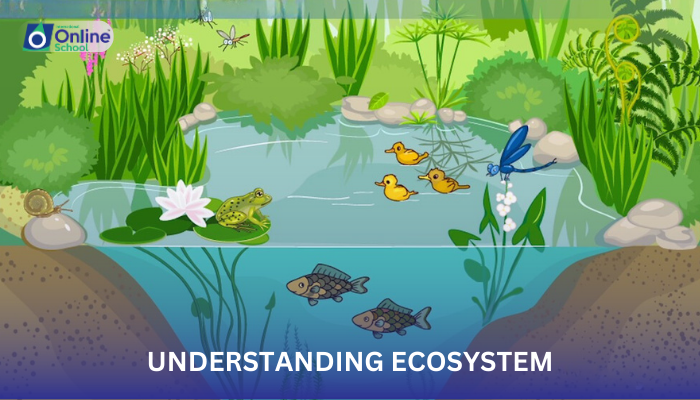
An ecosystem is a community of living organisms in conjunction with the non-living components of their environment, interacting as a system. These biotic and abiotic components are linked together through nutrient cycles and energy flows. Ecosystems can be of any size, but usually, they form a specific, distinct area such as a forest, a desert, a coral reef, or a grassland.
ii. Components of an Ecosystem
Biotic Elements: The living components of an ecosystem, known as biotic factors, include all the organisms that are part of that system. These can be divided into three main categories:
Producers (Autotrophs): These are organisms that produce their own food from sunlight (through photosynthesis) or chemical energy (chemosynthesis). Plants and algae are common examples.
Consumers (Heterotrophs): These organisms cannot produce their own food and need to consume other organisms. They include herbivores, carnivores, omnivores, and decomposers.
Decomposers: These organisms, such as bacteria and fungi, break down dead organisms, allowing their nutrients to re-enter the soil, water, and air.
iii. Abiotic Elements:
The non-living components, or abiotic factors, include physical and chemical aspects of the environment that influence living organisms. These factors include:
Climate: Temperature, precipitation, and other climatic conditions.
Water: Availability of water and its quality.
Soil: Mineral composition, pH, and soil structure.
Sunlight: The amount and intensity of sunlight.
Air: The composition of the atmosphere.
Topography: The geographical landscape, including altitude and slope.
iv. Interaction between Biotic and Abiotic Components
The interactions between biotic and abiotic components in an ecosystem create a system capable of sustaining, recycling, and producing energy. For instance:
- Plants (producers) use sunlight (an abiotic factor) to create food via photosynthesis.
- Animals (consumers) eat the plants and use the oxygen in the air (abiotic factor) to derive energy through respiration.
- Decomposers break down dead plants and animals, returning nutrients to the soil (abiotic factor), which in turn is used by plants for growth.
v. Forming a Functional Unit
The balance between the biotic and abiotic components is what makes an ecosystem functional. Energy flows start with sunlight and are transformed into biomass by producers. This energy is then transferred to consumers and finally to decomposers. Nutrient cycles, such as the carbon and nitrogen cycles, ensure that essential elements circulate within the ecosystem.
In conclusion, an ecosystem is a complex web of interactions between biotic and abiotic components. The health and functionality of an ecosystem depend on these interactions and the continuous flow of energy and nutrients. Understanding ecosystems is vital for conservation efforts and for predicting how changes in the environment might affect the balance and health of the planet.
